
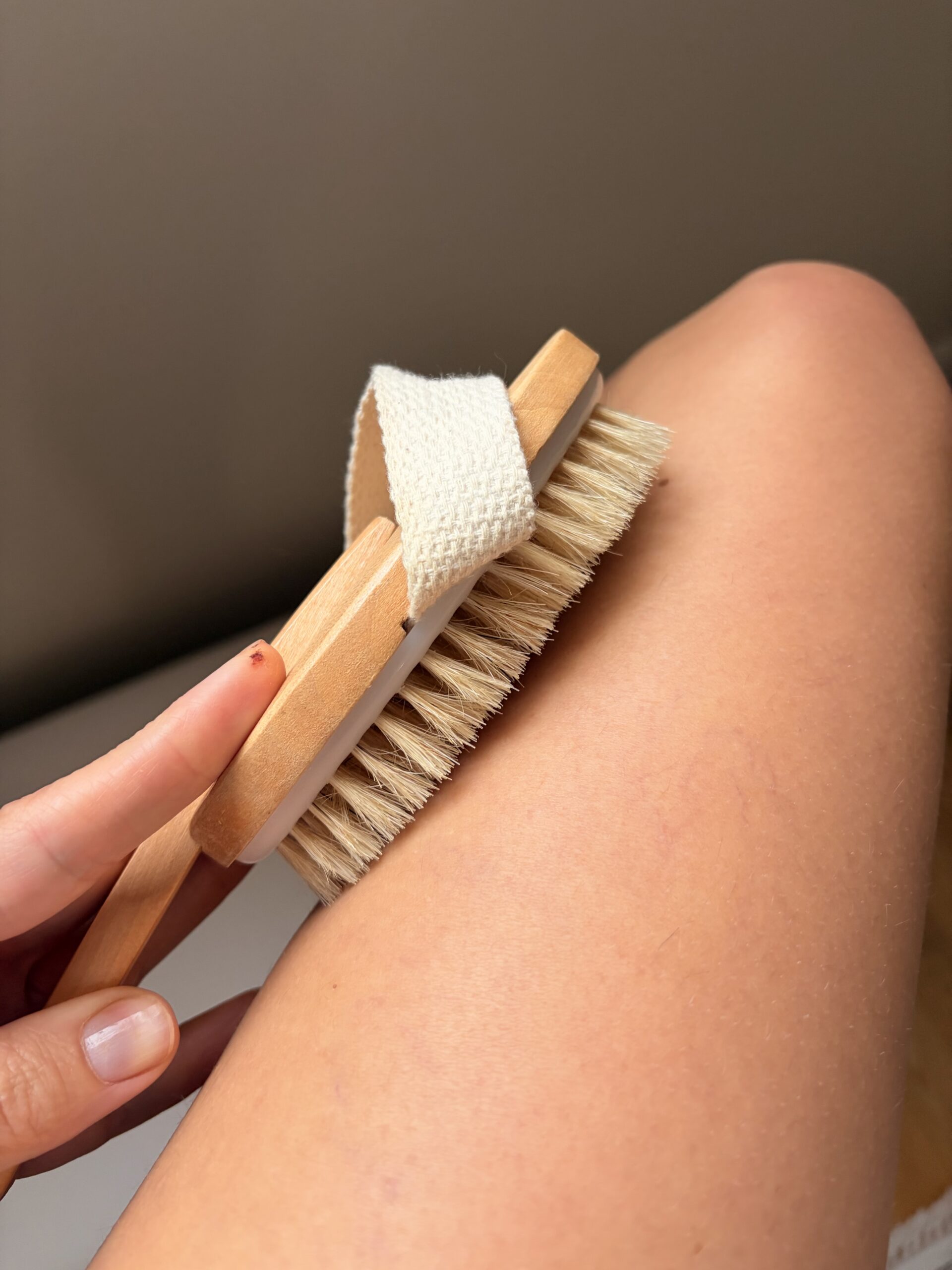
Dry brushing has become increasingly popular, with claims that it can “flush toxins,” “drain your lymph,” and even reduce cellulite. But what does the science actually tell us?
The truth is both simpler and more interesting.
Dry brushing is not a detox treatment, and there is no strong scientific evidence that it removes toxins from the body or dramatically increases whole-body lymph flow.
What it can do is gently exfoliate the skin, stimulate sensory nerve endings, temporarily increase local blood flow, and become a relaxing self-care ritual that complements a healthy lifestyle.
Your Skin Plays an Important Role
Your skin is your body’s largest organ and performs many essential functions every day. It protects you from harmful bacteria, helps regulate body temperature, supports your immune system, maintains fluid balance, and allows you to feel touch, pressure, and pain.
Just beneath the skin are tiny blood vessels, nerve endings, and the smallest lymphatic capillaries—where lymph collection begins.
How the Lymphatic System Works
Unlike blood vessels, the smallest lymphatic capillaries begin as tiny blind-ended vessels within the skin and superficial tissues. Their role is to collect excess fluid, proteins, immune cells, and cellular waste from surrounding tissues before returning this fluid to the bloodstream.
Because these delicate vessels lie so close to the skin, it’s understandable why dry brushing is often associated with lymphatic health.
What Does Dry Brushing Actually Do?
When performed gently with a natural-bristle brush, dry brushing can:
- Exfoliate dead skin cells
- Stimulate sensory nerve endings
- Temporarily increase local skin circulation
- Provide gentle mechanical stimulation to the skin and superficial connective tissue
These benefits are supported by anatomy and physiology.
However, current research has not shown that dry brushing detoxifies the body, removes toxins, or significantly increases lymphatic drainage throughout the body.
Why Some People Start at the Neck
Many lymphatic therapists begin manual lymphatic drainage around the collarbones, neck, armpits, and groin before treating the arms or legs. The aim is to prepare the central drainage pathways before encouraging fluid movement from the limbs.
Some people use this same approach when dry brushing.
While there is currently no strong research showing this sequence improves dry brushing outcomes, it follows the established principles used in manual lymphatic drainage.
A Gentle Dry Brushing Routine
If your healthcare professional has advised that dry brushing is appropriate for you:
- Take 5–10 slow diaphragmatic breaths.
- Using your fingertips (not the brush), gently stimulate the skin above the collarbones, along the sides of the neck, over the armpits, and over the groin using light circular movements.
- Use a natural-bristle brush on dry skin before showering.
- Brush using gentle strokes towards the nearest group of lymph nodes:
- Feet toward the ankles
- Legs toward the groin
- Hands toward the wrists
- Arms toward the armpits
- Abdomen using gentle clockwise circles
- Chest and upper back toward the collarbones
The pressure should be light enough to move the skin—not the muscles underneath. Your skin may become slightly pink, but brushing should never be painful or leave scratches or bruises.